By Leeanna Maher, registered pelvic health physiotherapist.
Bringing a baby into the world is an incredible physical and emotional experience. Yet despite how common childbirth is, many new parents receive very little guidance about what recovery should realistically look like afterward. Instead, social media, family advice, and “bounce back” culture often create expectations that can leave people feeling confused, discouraged, or even ashamed when recovery does not happen quickly.
As a pelvic health physiotherapist, I often hear patients say things like:
- “I thought leaking was normal after having kids.”
- “I assumed pain would just go away with time.”
- “Everyone told me I should be back to normal by six weeks.”
The truth is: postpartum recovery is much more complex — and much more individualized — than many people realize.
Let’s break down some of the most common postpartum recovery myths.
Myth #1: “You should be back to normal by 6 weeks.”
The six-week postpartum check is often misunderstood as a marker that the body is fully healed. In reality, six weeks simply means initial healing has occurred and basic medical clearance may be appropriate for certain activities.
Your body is still recovering well beyond this stage:
- Abdominal tissues continue healing for months
- Pelvic floor muscles may still be weak, overactive, or uncoordinated
- Hormonal changes can affect joints, muscles, bladder/bowel function, and vaginal tissue sensitivity
- Sleep deprivation and feeding demands may alter the anticipated recovery timeline
Recovery timelines vary greatly depending on:
- Vaginal versus cesarean delivery
- Degree of perineal tearing
- Instrument-assisted birth (i.e. forceps, vacuum, episiotomy)
- Newborn feeding strategy
- Previous injuries or level of physical activity during pregnancy
- Presence of mental health challenges and the level of support systems in place
Healing is not linear, and needing ongoing support is common. This is why it is helpful to onboard a pelvic physiotherapist to identify the unique factors of your pre and postnatal recovery journey that may influence the stages of healing.
Myth #2: “Leaking urine after having a baby is normal.”
While urinary leakage is common postpartum, it is not something you simply have to live with.
Leaking with:
- coughing
- sneezing
- jumping
- running
- urge to pee
may indicate pelvic floor dysfunction, pressure management issues, or coordination challenges between the pelvic floor and the surrounding muscles that support the trunk.
Many people assume the solution is “just do more Kegels,” but not every pelvic floor needs strengthening. Some muscles are already tense, overworked, or lacking proper relaxation and timing.
Pelvic physiotherapy can help assess:
- muscle coordination
- breathing mechanics
- pressure management
- tissue healing
- exercise readiness
There are effective treatment options available, and symptoms should not be dismissed simply because childbirth occurred.
Myth #3: “Pain during recovery is something you just need to tolerate.”
Persistent postpartum pain deserves attention.
Pain or discomfort may occur:
- around the scar after a cesarean birth
- around the scar at the perineum or even inside the vagina
- in the pelvis or tailbone
- during intercourse
- with bowel movements
- in the low back or hips
Some discomfort early on can be expected, but ongoing pain is not something you should feel obligated to “push through.”
Pain may relate to:
- scar mobility restrictions
- pelvic floor muscle tension
- nerve irritation
- muscle weakness or compensation patterns
- pressure management dysfunction
Seeking help early often improves recovery outcomes and can prevent symptoms from becoming more persistent.
Myth #4: “If your core feels weak, you should immediately start intense ab exercises.”
After pregnancy, the musculoskeletal system requires gradual retraining and progressive loading — not aggressive strengthening right away.
Exercises that create excessive pressure too early may worsen:
- pelvic heaviness and pressure
- urinary or fecal incontinence
- abdominal doming and strain
Early recovery should focus on:
- optimizing breathing mechanics
- reconnecting to the deep core muscles
- postural support and pressure management
- balance exercises that help to re‑establish awareness of your new centre of gravity
- guidance on how to support your body when lifting, rolling over, getting up from lying down or sitting
Recovery is not about “getting your body back,” but about supporting your body and mind through the different stages of postpartum healing. This includes factors such as sleep, hydration, nutrition, and emotional and psychological wellbeing. No two postpartum journeys are the same. Pelvic physiotherapy takes a whole-person approach to exercise guidance, rather than relying on fixed, time-based protocols.
Myth #5: “Cesarean birth is easier on the pelvic floor.”
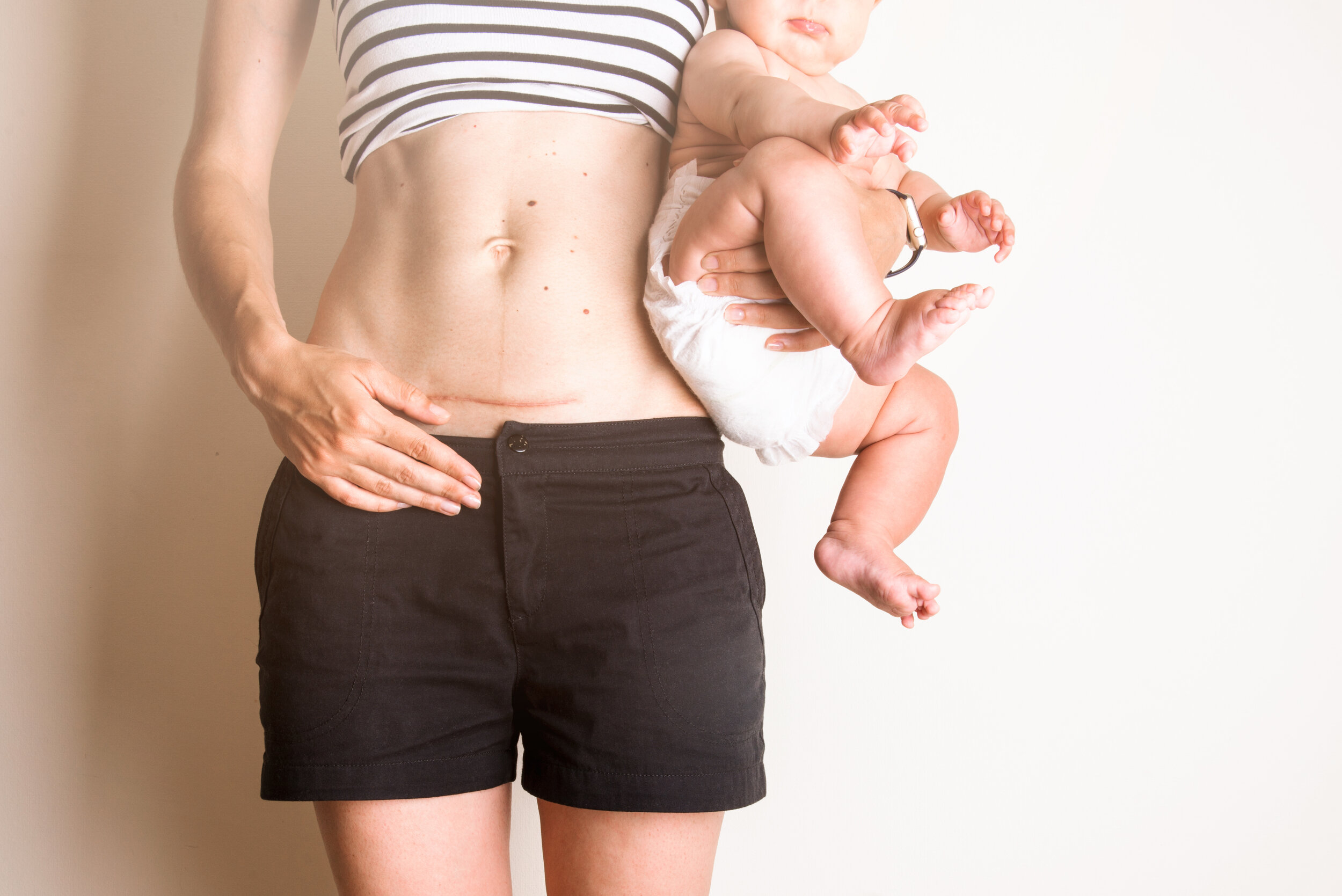
Cesarean delivery may reduce some forms of pelvic floor dysfunction, but it is still major abdominal surgery and pregnancy itself places significant demand on the pelvic floor.
People who have had cesarean births may still experience:
- pelvic pressure
- urinary symptoms
- abdominal weakness
- scar sensitivity
- low back or hip pain
- pelvic floor dysfunction
Both vaginal and cesarean births deserve thoughtful rehabilitation and support.
Myth #6: “Your body needs to bounce back.”
Perhaps the most harmful myth of all is the expectation that postpartum recovery should be fast, effortless, or invisible.
Your body has undergone enormous physical change. Recovery is not a race, and there is no single timeline for healing.
Support matters. Education matters. Rest matters.
Postpartum care should not end after delivery — and you do not need to wait until symptoms become severe before seeking help.

How Pelvic Health Physiotherapy Can Help
Pelvic health physiotherapy can support postpartum recovery by helping identify and address the underlying causes of pelvic-related dysfunction, including:
- Bladder and bowel symptoms
- Pelvic pain
- Scar mobility restrictions
- Return to exercise progression
- Pelvic pressure or prolapse symptoms
- Abdominal recovery and core function
- Sexual health concerns
Most importantly, it provides education and individualized care during a stage of life where many people are told their symptoms are simply “normal.”
They may be common — but that does not mean you need to struggle through them alone.
Recovery deserves support.
Book a session with one of our amazing pelvic health physiotherapists today.